Call of Duty Mobile burst onto the mobile gaming scene with a bang. Shortly after its release, the game pulled in over 35 million downloads around the world. The Garena version shot to the top of both Android and iOS charts. Many players even started using keyboard and mouse setups on PC. Despite all this energy, one missing feature left a large group of fans frustrated: official controller support.
In an exclusive interview with Hyperbeast, Chris Plummer talked about the team's experience and what players could expect next. During that conversation, he addressed the controller question directly. He said the team was already testing controller support with a portion of the live audience. Fair balance was a top priority. Plummer pointed out that Battle Royale already separated first-person and third-person players into different lobbies. A similar solution could be used for controller players if needed.
Why Controller Support Matters
Mobile shooters live and die by their control schemes. Touch controls work well for casual play, but they can feel imprecise in ranked matches. Controller support gives players a more console-like experience. It also helps players who have muscle memory from console or PC versions of Call of Duty. The demand was loud and clear. Activision's early beta versions actually included controller support, so the feature was not a new idea. It was simply removed at launch.
A Look Back at the Beta
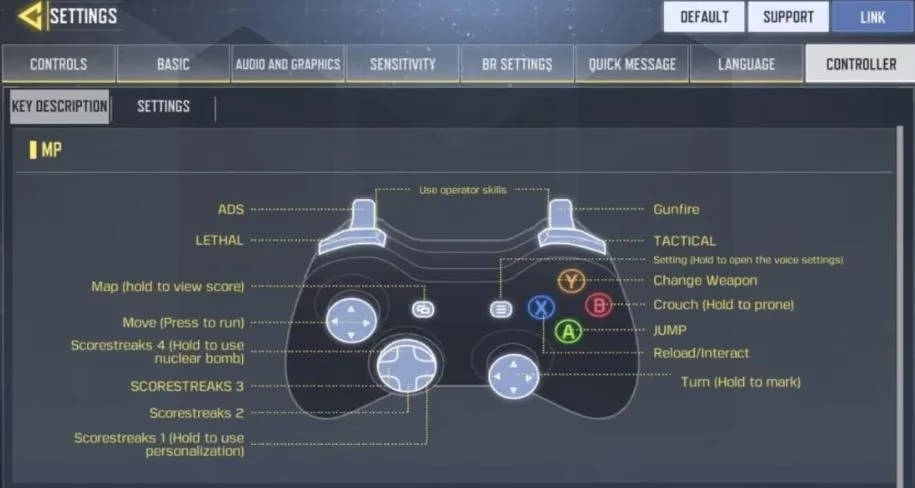
During the closed beta, players could connect controllers and see options in the settings. Screenshots from that period showed controller prompts on the interface. It made sense. Activision wanted the mobile game to feel like a real Call of Duty title. Removing the feature at release felt like a step backward for many fans. So Plummer's comments brought a wave of relief.
Fairness and Lobby Balance
One big concern with controller support is matchmaking fairness. A player using a controller often has better movement and aim than someone using touch controls. Plummer's idea of separate lobbies echoed the existing Battle Royale split. That approach could protect casual mobile players from being overmatched. It also gave controller users a place to compete against one another.
Here are a few possible ways the team could handle controller matchmaking:
-
🎮 Separate ranked and casual lobbies for controller users
-
📱 Keep touch-only lobbies for standard mobile play
-
🕹️ Allow mixed lobbies only when a controller player joins a party with touch players
-
⚖️ Use input-based matchmaking to keep fair balance
The Road to Official Support
The game's launch numbers were huge. 35 million downloads in a short time meant the community was enormous. Players in Southeast Asia and other regions were especially active. The Garena version dominated the app stores. Keyboard and mouse players on PC already had a workaround, but controller players wanted native support. The confirmation from Activision suggested the wait would not be too long.
From a 2026 perspective, it is easy to see that controller support eventually became a normal part of the mobile Call of Duty experience. But the early demand shaped how developers approached input balance. The conversation with Plummer remains a useful snapshot of a game trying to serve both casual players and competitive veterans.
What Players Can Do
Players who wanted controller support back then had to wait for an official update. In the meantime, the community shared tips on claw grip layouts and gyroscope settings. Some players used third-party controller mapping apps, though those methods were not always stable. Official support always felt like the better solution. Activision's testing phase suggested the team was serious about doing it right.
A Strong Sign for Mobile Esports
Controller support has major implications for mobile esports. It can open the door for more tournaments and skill-based competition. It also makes the game more accessible to players with certain physical limitations. Competitive integrity remains important. Input-based lobbies help protect that integrity without shutting anyone out.
The early days of Call of Duty Mobile were a whirlwind. Huge downloads. Top chart positions. Keyboard and mouse players. A missing feature. Then a promise. Chris Plummer's interview gave the community something to look forward to. Controller support may have been absent at launch, but the team clearly understood why players wanted it. And once the testing produced a fair system, the feature was ready to return.
That mix of patience and pressure from the community helped shape one of the most requested features in mobile shooter history.