The long-anticipated live-action adaptation of the Call of Duty video game franchise has officially entered a decisive new phase. Paramount Pictures and Activision confirmed in September 2025 that the project was moving forward, and by early 2026 the creative leadership has crystallized around two of Hollywood’s most respected storytellers: Peter Berg and Taylor Sheridan. The duo will steer the film as writer-director team, with Berg also producing alongside his Film 47 banner and Sheridan producing via his expanding production empire. David Glasser, a frequent Sheridan collaborator, joins the producing ranks as well.
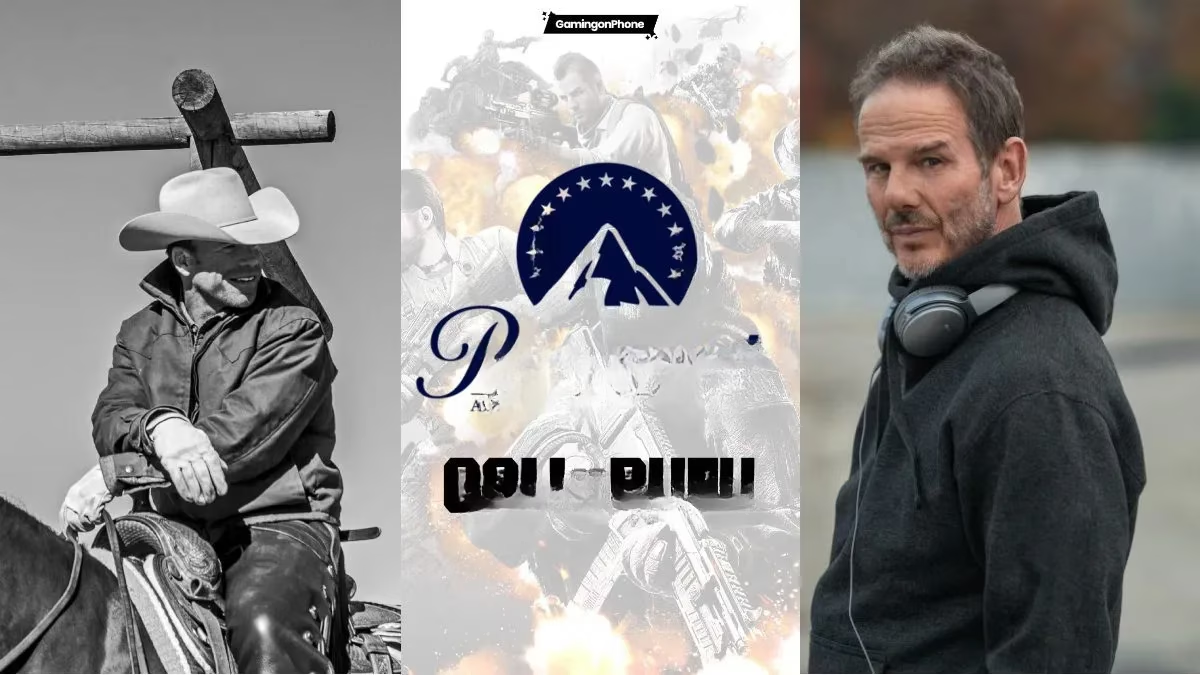
The confirmation ends years of speculation that swirled around one of gaming’s most valuable properties. Whispers of a Call of Duty movie first surfaced over a decade ago, cycling through various rumored attachments before settling into development limbo. The September announcement rekindled hope, but without named creative leads, fans remained cautious. Now, with Berg and Sheridan publicly locked in, the adaptation is no longer a distant possibility—it is an active production priority for both the studio and the publisher.
Peter Berg brings a distinct journalistic immediacy to action storytelling. His directorial résumé includes Lone Survivor, Deepwater Horizon, and Patriots Day, films that blend visceral combat sequences with character-driven urgency. Taylor Sheridan, by contrast, has built a reputation on mythic Western landscapes and morally complex narratives through Yellowstone, 1923, and the Oscar-nominated screenplay for Hell or High Water. Their previous collaboration on Wind River and the aforementioned Hell or High Water—which earned four Academy Award nominations including Best Picture and Best Screenplay—demonstrates a shared fluency in tense, grounded drama. It is exactly that brand of gritty storytelling the producers intend to inject into the Call of Duty universe.
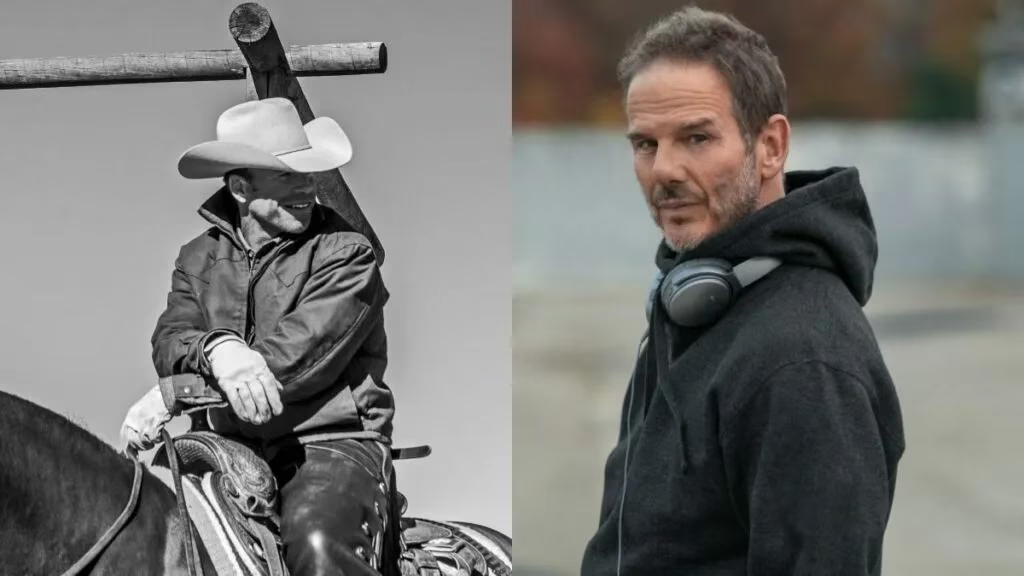
Industry observers note that the pairing is designed to bridge two tonal demands. Call of Duty’s campaigns traverse globe-spanning military operations, yet its most memorable moments often hinge on squad-level bonds and harrowing personal stakes. Berg’s ability to stage large-scale set pieces and Sheridan’s ear for dialogue-driven tension suggests the film will pursue a hybrid approach—a blockbuster that refuses to sacrifice character depth for spectacle.
The franchise’s commercial footprint underscores what is at stake. Since its 2003 debut, Call of Duty has sold more than 500 million copies worldwide, generating billions in revenue and embedding itself into the fabric of modern gaming culture. It has shaped multiplayer trends, redefined annual release cycles, and spawned mobile juggernauts. Transforming that interactive legacy into a cinematic property represents both a monumental opportunity and a significant creative challenge. The producers have repeatedly emphasized that the goal is not simply to replicate a campaign on screen but to expand the universe, making it accessible to longtime players and newcomers alike. Early discussions within the development team have reportedly explored storylines that stand independently while honoring iconic elements—fan-favorite characters, signature weapons, and the moral ambiguity of modern warfare.
Paramount’s commitment to the project has deepened alongside the creative hires. The studio views the adaptation as a potential cornerstone of a broader franchise strategy that could encompass sequels and spin-offs if the first film resonates. Insiders describe the current phase as a “ramp-up,” with the writing room actively drafting the first screenplay and pre-production scouting under way. While no casting decisions have been announced, the involvement of Sheridan and Berg has already sparked interest from agencies eager to place top-tier talent.
The road to this point has not been without detours. In 2024, reports circulated that Steven Spielberg—a self-professed Call of Duty enthusiast—had expressed interest in directing the film. Those conversations did not materialize into a formal deal, but the brief possibility fueled fan excitement and demonstrated the franchise’s pull even among cinema’s elite. Instead, Paramount opted for a creative leadership structure that diversifies risk and marries directorial experience with prolific writing firepower.
Development is also benefiting from Activision’s hands-on involvement. The publisher has embedded franchise lore keepers within the production to ensure narrative continuity and respect for the source material. This collaborative model mirrors what has worked for other game-to-screen translations, where publisher oversight can protect intellectual property while filmmakers bring fresh perspective. The balance, according to production insiders, has been respectful and productively iterative.
For audiences weary of hollow video game adaptations, the Berg-Sheridan pairing represents a meaningful commitment. Both filmmakers have demonstrated a capacity to engage critically with violence, patriotism, and loss—themes that sit at the core of Call of Duty’s most praised installments. Their track record suggests the movie will not shy away from the human cost of war, even as it delivers the adrenaline-fueled action the brand commands.
As 2026 unfolds, the Call of Duty film is transitioning from announcement to execution. Casting bulletins, shooting locations, and a final release window are expected within the coming months. For now, the combination of a storied gaming franchise, a major studio push, and two Oscar-nominated collaborators has generated a level of anticipation that few video game adaptations ever achieve before a single frame is shot. The mission is clear: bring Call of Duty to the big screen with the intensity it deserves, and build a cinematic world worthy of the millions who have enlisted over two decades.