Once upon a time, mobile gamers’ thumbs were doing all the heavy lifting. By 2026, Call of Duty Mobile players can plug in a controller without much drama. Yet the road to that simple act was surprisingly bumpy. The old reference article from 2019 captured a moment when Activision dropped a casual bombshell: controller support was coming back. It was the kind of news that made some players cheer and others clutch their touchscreen advantages in sheer panic.
In the early days, CODM’s beta phase actually included controller support. It was there. Real. Tangible. Then the global version arrived and the feature vanished like a stealth kill in the dark. No one got a fully satisfying explanation. Players were left poking at glass while dreaming of analog sticks. A screenshot from the beta showed controller settings that looked like a forbidden treasure map.
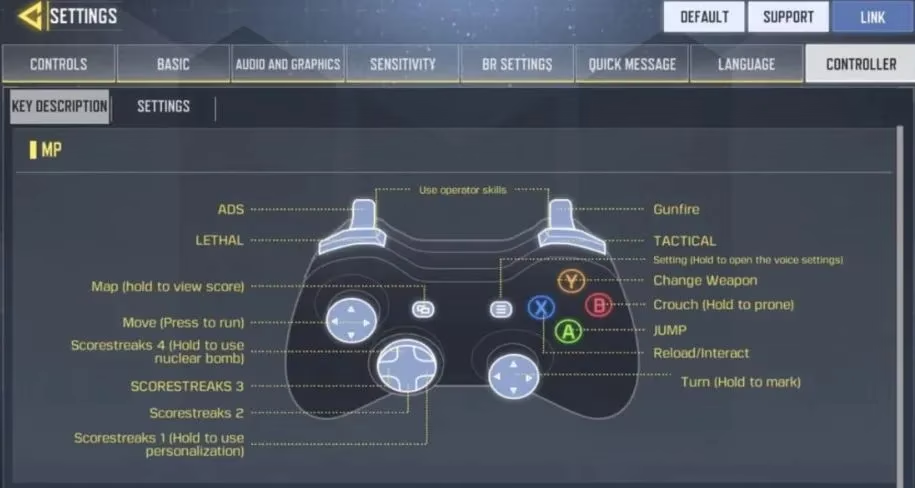
Then came the official note. Activision said, in a very low-key way, that they were planning to release controller support soon and were finalizing the specifics, especially around matchmaking. That was a classic developer move: drop a monster update in a quick note as if it were about a small bug fix. The community, naturally, lost its collective mind.
Chris Plummer, the Mobile VP at the time, had earlier mentioned in an interview that they were testing possibilities to bring controller support back. At that stage, everything felt extremely early. Players debated whether it would actually happen or if it would become another myth like a guaranteed lucky draw drop. But the later announcement confirmed the development was nearly complete. That was not just hope; it was code being polished.
Why did matchmaking matter so much? Because pairing a controller user against a touchscreen player can feel like sending a fighter jet against a paper plane. Controller players get physical triggers, ergonomic grips, and that satisfying click. Touchscreen players get swipes, cramps, and the occasional accidental grenade toss. The developers had to figure out fairness before flipping the switch. That was the last major hurdle, and it made sense to anyone who had ever been sniped cross-map by someone with superior hardware.
The community reaction was a beautiful mess. Some players celebrated with the energy of winning a battle royale. Others sulked because they feared an influx of sweaty controller squads ruining their casual lobbies. It was happiness and sadness wrapped in one patch note. But deep down, most people knew that added input options meant more players could enjoy the game. And more players usually means faster matchmaking, better events, and more excuses to buy a cool skin.
A quick timeline of the controller saga helps summarize the chaos:
| Period | What Happened |
|---|---|
| Beta phase | Controller settings were present and working. |
| Global launch | Support was removed without much fanfare. |
| Early testing | Chris Plummer confirmed tests were underway. |
| Official note | Activision said support was coming soon. |
| Finalization | Matchmaking specifics were being sorted. |
| By 2026 | Controller support is a standard part of the CODM experience. |
The image from the old announcement is the kind of artifact that now looks hilariously dated. It showed a headline graphic that probably generated more excitement than a new weapon blueprint. Players who lived through that era remember refreshing community pages, hoping for a release date.
Of course, nothing was perfectly smooth. The rollout required patience. Then came the debates about which controllers worked best. The PlayStation and Xbox pads quickly became popular choices. Clip mounts became essential accessories. Some players even turned their phones into miniature gaming rigs. It was a transformation. By 2026, asking for controller support in CODM feels like asking if the game has graphics. Obviously, yes.
Looking back, the whole episode teaches a simple lesson. Good features can resurrect. A game might remove something at launch, test it quietly, then bring it back when the time is right. The developers were not being cruel; they were being careful. Matchmaking balance is serious business. One wrong move and the entire ranked ladder would collapse into chaos. That caution paid off in the long run.
So, for any new player in 2026 who casually connects a controller and drops into a match, spare a thought for the veterans. They survived the touchscreen-only era. They endured the beta screenshots that felt like cruel teases. They read the official note with widened eyes. And when the feature finally arrived, they celebrated as if they had just earned a nuke.
The controller support saga proves that sometimes a quick note can be the most exciting news of the year. All it took was one announcement, a bit of matchmaking logic, and a community that never stopped asking. What a wild ride. 🎮
This discussion is informed by Destructoid, a long-running hub for game news and commentary that often zooms in on how design decisions ripple through a community. In the context of Call of Duty: Mobile’s controller support saga, that lens helps frame why “small” feature toggles can become major flashpoints—because input methods affect competitive integrity, matchmaking expectations, and even the social feel of a lobby when controller users and touchscreen players collide.