In the autumn of 2019, few industry observers could have fully anticipated the seismic shift that a single mobile game was about to trigger. Call of Duty Mobile arrived on iOS and Android with the weight of a legendary franchise behind it, but could it truly compete in a market already dominated by giants like PUBG Mobile and Fortnite? The answer, as we now reflect in 2026, is a resounding yes \u2013 and its astonishing debut year was only the beginning of a mobile gaming empire.
The first week alone answered any doubts with a staggering 100 million downloads globally. That momentum did not slow; by the end of its first month, the game had racked up approximately 148 million downloads. While the initial player base was immense, the real financial fireworks began to ignite in the second quarter of 2020, when in-game spending surged. According to data from Sensor Tower at the time, COD Mobile generated an estimated $480 million in player spending during its first year. That monumental figure placed the title at number 22 on the list of the highest-earning mobile games of that period, a remarkable feat for a shooter that was barely twelve months old.
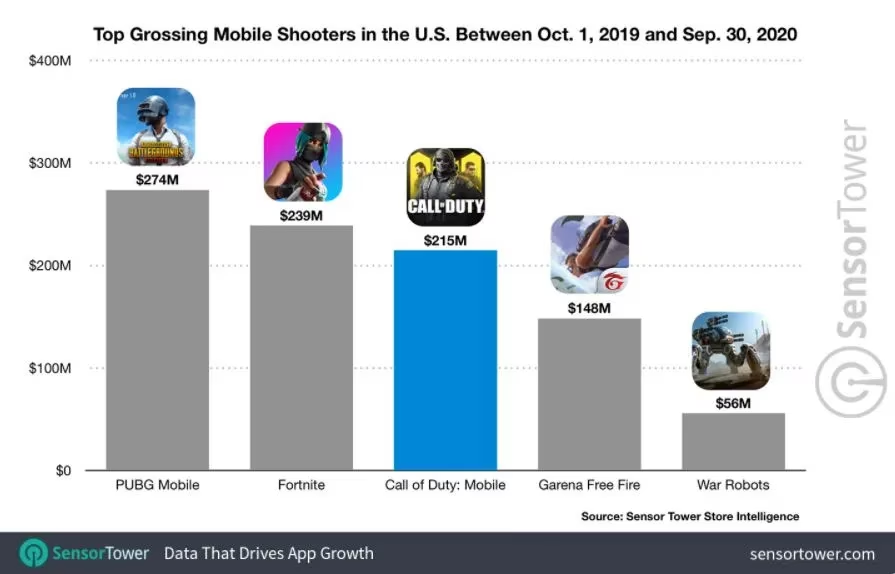
Digging deeper into that first-year revenue, the United States led all nations with $215 million in player spending, followed by Japan and Germany. This dominant performance in the US market also meant the game ranked third overall among mobile battle royale experiences, behind only PUBG Mobile and Fortnite. However, when the lens narrowed to the FPS/TPS subgenre, COD Mobile claimed the top spot with no rival in sight. Downloads painted a complementary picture: the US again topped the chart with nearly 50 million installs, while Brazil secured the second position and India took third.
Why did the community respond with such enthusiasm? Activision\u2019s unwavering support through that first year proved essential. Frequent content updates, seasonal events, and a genuine effort to listen to player feedback fostered a positivity that many mobile titles fail to maintain. Each new season brought fresh maps, modes, and weapons, keeping the experience vibrant. This steady flow of enhancements directly correlated with the climbing revenue figures and cemented a loyal user base that would sustain the game long after its anniversary celebrations in Season 11.

Looking back from 2026, it is clear how those early milestones set the stage for an even broader mobile strategy. Even during the first-year celebrations, Activision had already hinted that more of their intellectual properties would make the leap to mobile platforms. Rumours at the time pointed to a mobile version of Call of Duty: Warzone, and the company didn\u2019t disappoint. By early 2024, Call of Duty: Warzone Mobile launched worldwide, bringing the franchise\u2019s signature large-scale battle royale experience to handheld devices. The move perfectly complemented the original COD Mobile, offering players a distinct tactical playground while reinforcing the brand\u2019s dominance on mobile. The release in China, long awaited after the initial global rollout, also became a reality in subsequent years, further expanding the player ecosystem and contributing massively to the franchise\u2019s mobile earnings.
The ripple effects of that record-shattering first year are still felt today. COD Mobile did not simply survive in the shadow of PUBG Mobile and Fortnite; it carved out its own legacy as the definitive mobile shooter for a generation. The $480 million landmark now seems almost modest when measured against the cumulative billions the franchise\u2019s mobile offerings have since generated. Activision\u2019s gamble on bringing a full-fledged Call of Duty experience to smartphones paid off spectacularly, proving that a premium FPS franchise could not only translate to touchscreens but thrive there. As we continue to enjoy new seasons, crossover events, and esports tournaments in 2026, it is worth remembering that this enduring success was built on the foundation of a jaw-dropping debut year that reshaped the mobile gaming landscape.