I still remember the mix of hope and impatience that rippled through the Call of Duty Mobile community back in early 2020. While the Garena version was already hosting flashy tournaments, the global player base felt left in the dark. We flooded every Activision blog post and social thread with the same burning question: “What about esports?” The silence was deafening until one community update finally broke it. The developers admitted they were discussing it internally but had nothing public to share yet. What came next, though, was the spark that lit a fire under thousands of players like me: they promised to support community-run tournaments anywhere in the world, from India to Europe to the Americas. I saw that message and immediately thought – this is our chance.
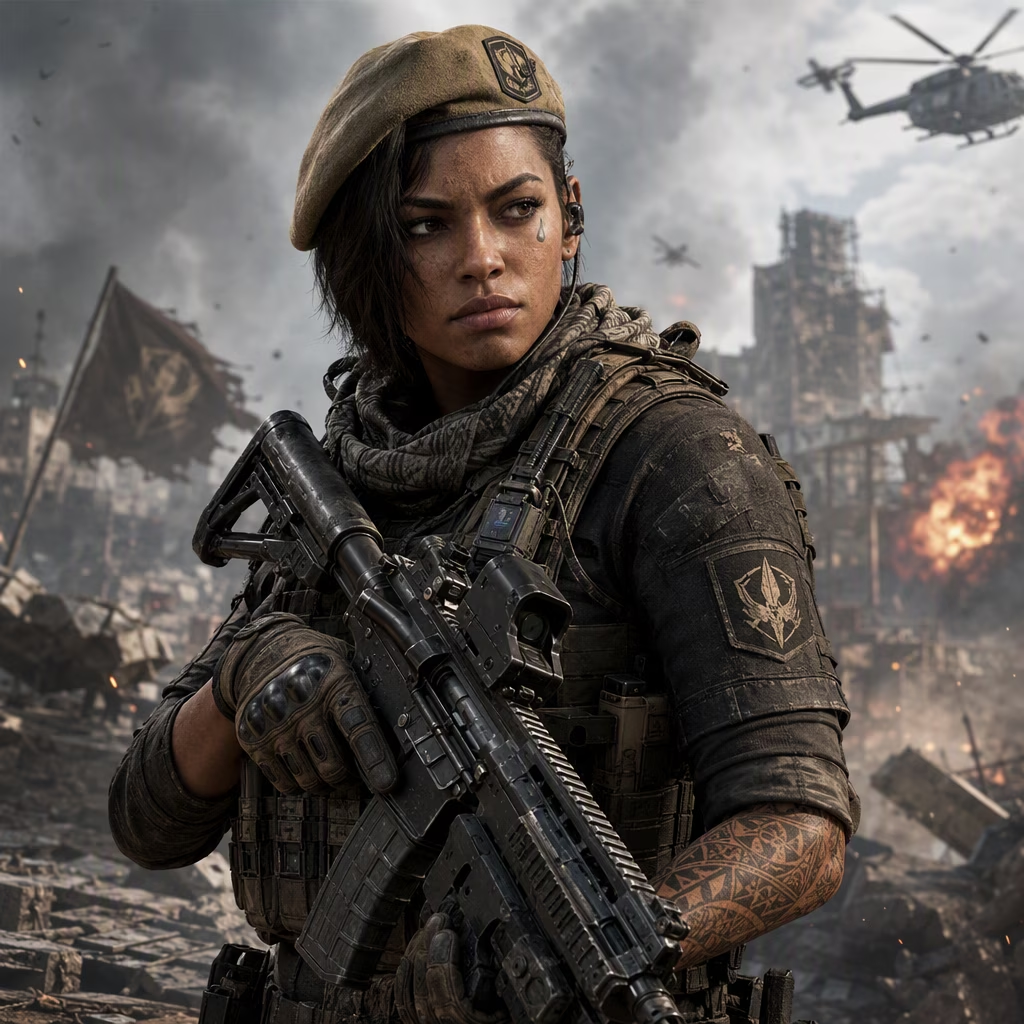
That statement wasn’t just corporate fluff. It was a direct invitation. Almost overnight, grassroots organizers mobilized. In India, a tournament popped up through Asian War House, MyGameMate, and RheoTV with a $300 prize pool. It might sound small today, but back then it felt monumental. I gathered my squad, a ragtag group of ranked grinders who barely knew each other’s real names, and we registered through their Discord server. The battles were raw and unpolished, often plagued by ping spikes and last-minute rule tweaks, but the adrenaline was authentic. I remember clutching a 1v3 on Raid during a Search & Destroy semifinal, my hands trembling as the defuse sound filled my earphones. We didn’t win the grand prize, but that tournament taught me something priceless: competitive COD Mobile was not just a fantasy. It was a living, breathing ecosystem waiting to explode.
Activision kept its word and gradually built the framework they had hinted at. Through the remainder of 2020 and into 2021, we saw the launch of official regional qualifiers and eventually the first COD Mobile World Championship. The difference between those early community cups and the World Championship stages was staggering. Professional production, structured rulesets, and prize money that could change lives – suddenly, the game I played on my phone during lunch breaks had become a legitimate career path. I transitioned from a casual competitor to a dedicated analyst, streaming matches and breaking down rotations on Standoff and Firing Range. The lore of those maps became sacred to us because every corner told a story of lost gunfights and miraculous comebacks. Shotzzy might be a legend in the console CDL, but in our corner of the world, names like iFerg, Jokesta, and Marshy were the ones we studied frame by frame.
By 2023, the mobile esports landscape had fundamentally shifted. COD Mobile carved out a massive slice of the pie, running multi-million dollar circuits that rivaled PUBG Mobile’s established dominance. The game’s unique blend of boots-on-the-ground gunplay and strategic scorestreak management offered something no other mobile title could replicate. I got a chance to attend a live Stage 4 regional final in Europe, and standing in that arena, hearing the crowd roar for a well-placed Sparrow shot, I felt the full weight of how far we had come. The Activision community team, which once spoke about “internal discussions,” was now handing trophies to teenagers who had sharpened their skills in those same community tournaments they first supported.
Now, in 2026, I look back at that 2020 blog post as a turning point not just for the game, but for my own life. The esports infrastructure that was only a whisper then is now a juggernaut. We have dedicated third-party platforms like GameBattles fully integrated, year-round franchised leagues in select regions, and an annual Championship Sunday that routinely pulls over half a million concurrent viewers. The talent pipeline is healthier than ever – aspiring pros cut their teeth exactly where I started, in community and amateur brackets that Activision continues to nurture. The latest tournament cycle just introduced a new respawn mode specifically designed for spectators, proof that the developers are still listening and iterating.
What excites me most is the accessibility that remains at the heart of it all. Anyone with a mid-range smartphone can still download the game, form a team, and grind through open qualifiers. The dream that began with a $300 Discord tournament in India has scaled into a global phenomenon where a 16-year-old from anywhere can become a world champion. I’ve watched teammates from that very first squad go on to sign with orgs, and I’ve built a career out of covering the scene I love. The journey from uncertainty to global recognition wasn’t instant, but every step, patch note, and community tweet mattered. COD Mobile esports isn’t just an accessory to the game anymore – it is the heartbeat.