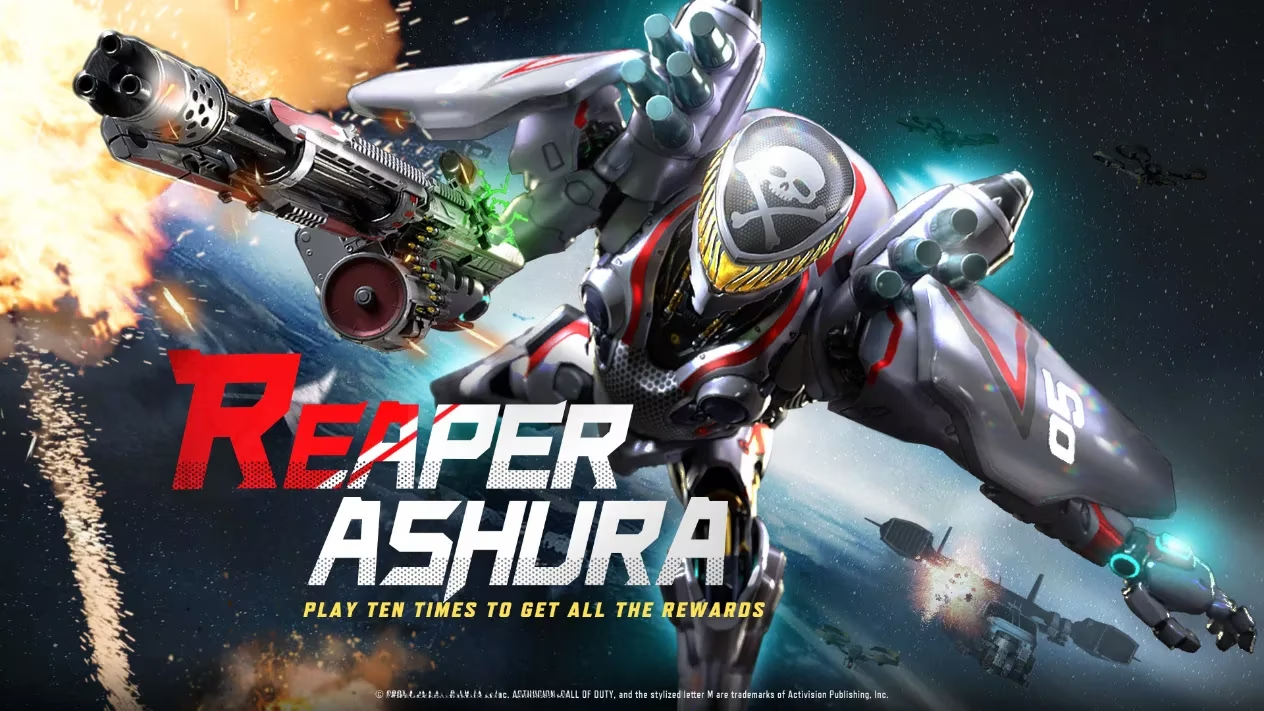
Call of Duty: Mobile’s Season 7 Ashura collaboration arrived as a collision between tactical shooter design and Japanese mecha artistry. At its center stood the Reaper – Ashura, an unmanned bipedal drone prototype from ATLAS Corporation’s Japanese branch. Codenamed Ashura, the machine was presented as a battlefield unit capable of executing complex human tasks, and its in-game operator skin turned the Reaper into a walking piece of industrial anime design. By 2026, the collaboration has settled into a retrospective glow: newer seasons have come and gone, yet the Ashura Draw remains a useful reference point for how far cosmetic crossovers can push a mobile shooter’s visual identity.
Shoji Kawamori and the Mechanical Signature
The Ashura project carried a rare credential: the involvement of Shoji Kawamori, a designer whose name is woven into the history of transforming mecha animation. While a student at Keio University, Kawamori worked as one of the original writers of the TV anime series The Super Dimension Fortress Macross, where he designed the three-stage transforming mecha Valkyrie. At 23 years old, he was chosen to direct the movie Macross: Do You Remember Love? His later work expanded across Aquarion, Ihatov Fantasy: Kenji’s Spring, mecha designs for Mobile Suit Gundam 0083: Stardust Memory, and the mecha designs for the 1995 Ghost in the Shell anime film.
That background gave the Reaper – Ashura a different kind of weight. It was not merely a robot skin dropped into a shooter; it was a small gallery of Kawamori’s design grammar, translated into a mobile-game operator. In 2026, Kawamori’s involvement still reads as a rare bridge between the arcade energy of Call of Duty: Mobile and the lineage of transforming mecha animation. The artist expressed hope that players would enjoy the special skin he designed for the game, and the draw surrounding that skin made the collaboration feel like a compact mecha showcase rather than a single cosmetic item.
Reaper – Ashura: A Combat Mech Ready for Action
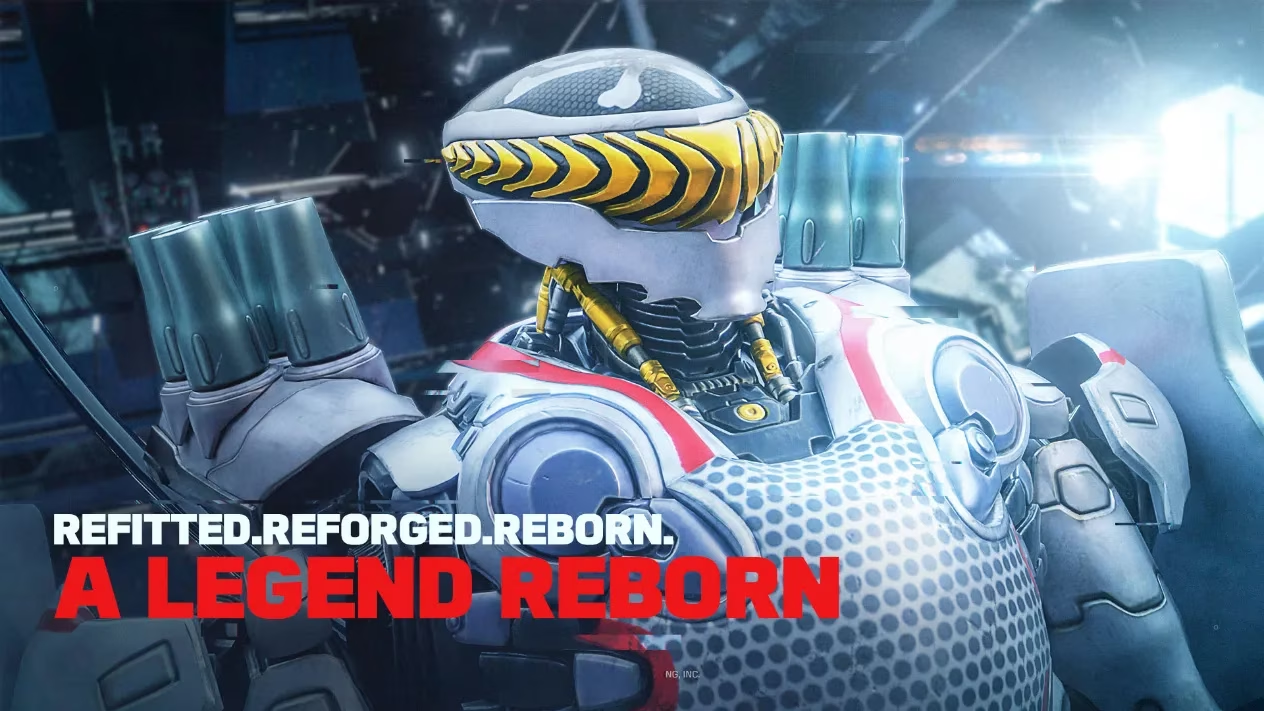
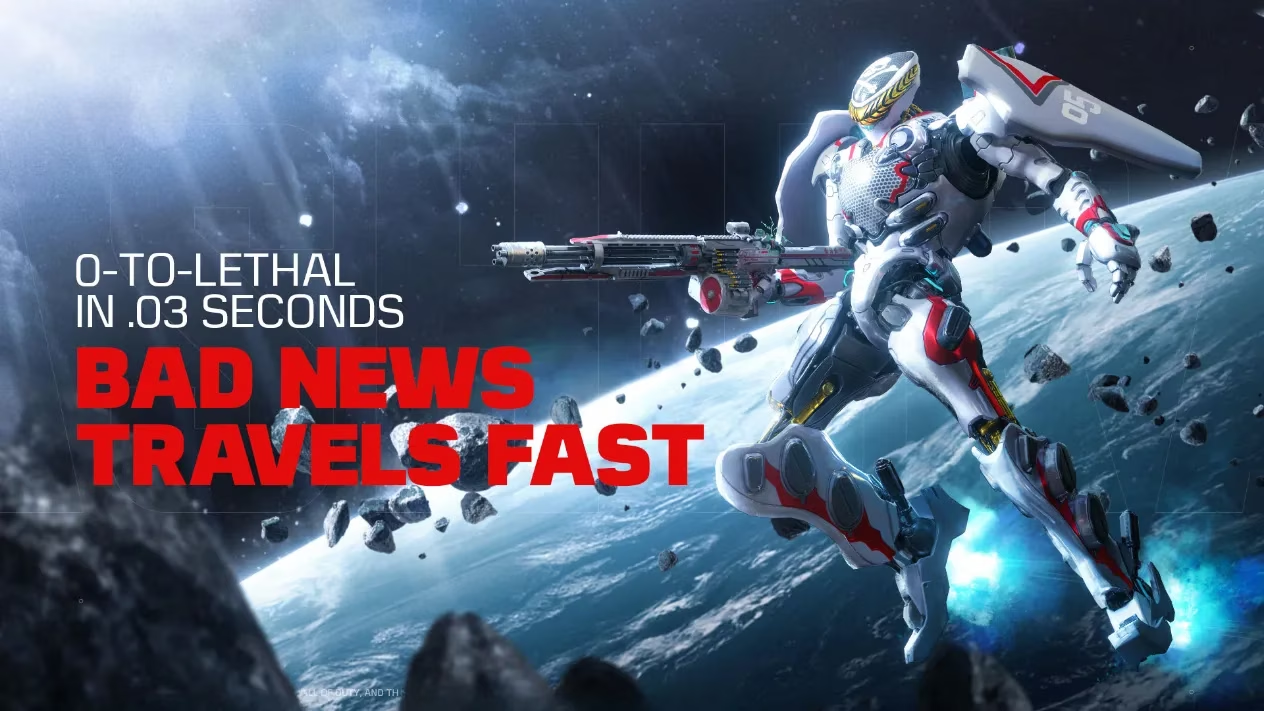
The Reaper – Ashura was framed as an advanced robot that demanded an advanced weapon. That weapon arrived as the Legendary M4LMG – Salamander, a devastating LMG blueprint also designed by Kawamori. The Salamander was described as fully integrated into the robot’s interface, providing a heads-up display whenever the weapon was used. Its ammunition was electrically charged, creating an explosion when eliminating targets and leaving nothing but smoke in the wind.
The Reaper – Ashura moves through a battlefield like a calligraphy brush loaded with gunpowder: precise, deliberate, and able to rewrite the page in a single stroke. The Salamander’s charged rounds make each elimination feel like a thunderclap used as punctuation, briefly underlining the end of a firefight before smoke erases the sentence. The entire Ashura Draw, meanwhile, is a mechanical matryoshka: open the operator, and inside are a weapon blueprint, a launcher, a charm, and a wingsuit, each layer repeating Kawamori’s design language in a smaller key.
What the Ashura Draw Offered
The Ashura Lucky Draw bundled the Reaper – Ashura operator with several Epic items and the Legendary M4LMG – Salamander. The mix was notable because it treated the draw as a coherent set rather than a pile of unrelated rewards.
| Item | Type | What It Brings |
|---|---|---|
| Reaper – Ashura | Operator skin | A bipedal combat mech designed with Shoji Kawamori’s signature |
| M4LMG – Salamander | Legendary weapon blueprint | Integrated heads-up display and electrically charged ammunition |
| LK24 – Firehook | Epic weapon | A themed rifle to round out the loadout |
| FHJ-18 – Technophile | Epic launcher | A mechanical counterpart for anti-vehicle play |
| Charm - Lil’ Ashura | Epic charm | A miniature nod to the collaboration’s mascot design |
| Wingsuit - Technophile | Epic wingsuit | A matching cosmetic for airborne insertion |
🎯 For players evaluating the draw in hindsight, the appeal is easy to understand. The Reaper – Ashura is not subtle; it is a bright, angular statement piece. The advice attached to the original reveal was blunt: if you see Reaper – Ashura, run for your life. That line captured the intended fantasy. The operator was meant to feel like a prototype that had escaped a laboratory and walked directly into a match, with the Salamander as its ceremonial sidearm in LMG form.
⚙️ The draw also reflected a broader pattern in Call of Duty: Mobile’s cosmetic history. Crossovers work best when they do more than paste a famous name onto a rifle. The Ashura set worked because the operator, the weapon, the charm, and the wingsuit all spoke the same visual language. It was a collaboration with a designer, not just a license. That distinction matters more in 2026, when players have seen countless themed bundles and can recognize when a set has a real authorial fingerprint.
🔥 The Legendary M4LMG – Salamander remains the draw’s mechanical heart. Its interface integration and charged-ammo effect made it feel less like a standard blueprint and more like a piece of hardware lifted from an anime cockpit. The explosion on elimination gave the weapon a dramatic full stop, while the smoke effect preserved a sense of aftermath. In a game where feedback and spectacle often matter as much as raw stats, that kind of presentation can define a weapon’s reputation.
✨ As of 2026, the Ashura Draw is no longer a current-season headline, but its design lesson is still relevant. It shows how a mobile shooter can use a guest artist to create a self-contained world inside a single draw. The Reaper – Ashura may be a legacy item now, but it remains a sharp reminder that cosmetic crossovers can be more than marketing. They can be small, playable exhibitions of an artist’s style, wrapped in a battle royale and multiplayer package. For players who appreciate mecha design, the Ashura collaboration is a time capsule worth revisiting, and for newer players, it is a benchmark for what a themed operator set can aspire to be.